Eiffel Tower Day is an annual celebration on March 31st, in honor of the completion of the Eiffel Tower in Paris in 1889. It is a day to appreciate the iconic symbol of France.
#HASHTAGS
#EiffelTowerDay
Eiffel Tower Day is celebrated annually on March 31st.
The first day of spring, also known as the Spring Equinox, marks the beginning of a new season filled with renewal, longer daylight hours, and warmer temperatures. This transition from season to season is celebrated across cultures and symbolizes growth, balance, and new beginnings.
What is the Spring Equinox?
Also known as the Vernal Equinox, occurs when the sun is directly above the equator, resulting in nearly equal hours of daylight and darkness. This astronomical event signals the official start of spring in the Northern Hemisphere and autumn in the Southern Hemisphere.
The Significance of the First Day of Spring
It is more than just a shift in weather—it carries deep cultural, spiritual, and environmental meanings:
Longer Days and Warmer Weather – With the sun positioned higher in the sky, daylight increases, bringing milder temperatures.
Rebirth and Renewal – Many cultures see spring as a time for fresh starts, planting crops, and spiritual renewal.
Wildlife Awakening – Animals emerge from hibernation, and migratory birds return as nature revives.
Spring Festivals and Traditions – Events like Nowruz (Persian New Year), Holi (Festival of Colors), and Easter are closely linked to spring’s arrival.
Ways to Celebrate
Embrace the season of growth and rejuvenation with these activities:
Go Outside – Enjoy the warmer weather by taking a nature walk, hiking, or gardening.
Plant Flowers or Vegetables – Kickstart the gardening season with colorful flowers or fresh produce.
Declutter Your Home – Spring cleaning symbolizes a fresh start and brings positive energy.
Practice Mindfulness and Meditation – Use this time to set new goals and reflect on personal growth.
Celebrate with Seasonal Foods – Enjoy fresh produce such as strawberries, asparagus, and leafy greens.
Participate in a Local Festival – Attend community events, farmers’ markets, or outdoor concerts.
Fun Facts
The term equinox comes from the Latin words aequus (equal) and nox (night), meaning “equal night.”
The Great Sphinx in Egypt is aligned with the sun on the Spring Equinox.
According to folklore, you can balance an egg upright on the equinox due to gravitational forces.
Japan celebrates the equinox with Shunbun no Hi, a national holiday focused on nature appreciation.
#HASHTAGS
#FirstDayOfSpring
First Day Of Spring is celebrated annually on the day of the Vernal Equinox.
Daylight Saving Time (DST) is a seasonal practice where clocks are set forward by one hour in the spring and set back in the fall to maximize daylight hours. In 2024, DST in the United States begins on March 9th and ends on November 2nd. While many countries follow this system, DST remains debatable regarding its benefits and drawbacks.
The History of Daylight Saving Time
The concept of adjusting clocks to better use daylight dates back to Benjamin Franklin in 1784, who humorously suggested it as a way to save candles. However, Germany first implemented the modern form of DST during World War I and later adopted it by other countries to conserve energy. The United States formally standardized DST with the Uniform Time Act of 1966.
Key milestones in DST history include:
1916 – Germany becomes the first country to adopt DST during World War I.
1918 – The United States introduced DST, which was repealed after the war.
1966 – The Uniform Time Act establishes DST across the U.S.
2007 – The U.S. extends DST by four weeks under the Energy Policy Act.
The Benefits of Daylight Saving Time
Supporters of DST argue that adjusting clocks offers several advantages:
Energy Conservation – By reducing artificial lighting and evening electricity use, DST can lower energy consumption.
More Daylight for Activities – Longer daylight hours encourage outdoor recreation and shopping, boosting local economies.
Fewer Traffic Accidents – More daylight in the evening hours is believed to improve road safety.
Boosts Mental Health – Increased sunlight exposure can reduce seasonal affective disorder (SAD) symptoms.
The Controversies and Criticism of DST
Despite its benefits, DST has faced criticism and calls for its elimination. Common arguments against DST include:
Health Disruptions: The time change can disturb sleep patterns and increase the risks of heart attacks and strokes.
Limited Energy Savings: Some studies suggest modern electricity use patterns negate DST’s original purpose.
Economic Confusion: Not all regions observe DST, causing scheduling issues in business and transportation.
Impact on Agriculture: Farmers, in particular, have expressed concerns about the disruption DST causes to their schedules.
Which Countries Observe Daylight Saving Time?
DST is observed in over 70 countries worldwide, though policies vary by region:
United States & Canada: Most regions follow DST except Arizona (excluding Navajo Nation) and Hawaii.
Europe: The European Union observes DST but has debated eliminating it.
Australia & New Zealand: Some states and territories observe DST while others do not.
Asia & Africa: Many countries do not observe DST due to their proximity to the equator.
Future of Daylight Saving Time
Debates continue about whether DST should be abolished or made permanent. In the U.S., the Sunshine Protection Act, proposed in recent years, aims to make DST permanent, eliminating the biannual clock changes. However, the decision remains unresolved.
#HASHTAGS
#DaylightSavingsTime
Daylight Savings Time is celebrated annually on the second Sunday In March.
National Turkey Neck Soup Day is a food holiday that is celebrated annually on March 30th. As the name suggests, it is a day to enjoy a hearty soup made with turkey necks, vegetables and spices. The day aims to celebrate this traditional
#HASHTAGS
#NationalTurkeyNeckSoupDay
National Turkey Neck Soup Day is celebrated annually on March 30th.
National Kick Butts Day is an annual event in the United States that aims to raise awareness about the dangers of tobacco use, particularly among youth. It is a nationwide campaign to encourage people to kick the habit of smoking and promotes a healthy and smoke-free life.
#HASHTAGS
#NationalKickButtsDay
National Kick Butts Day is celebrated annually on Changes Annually.
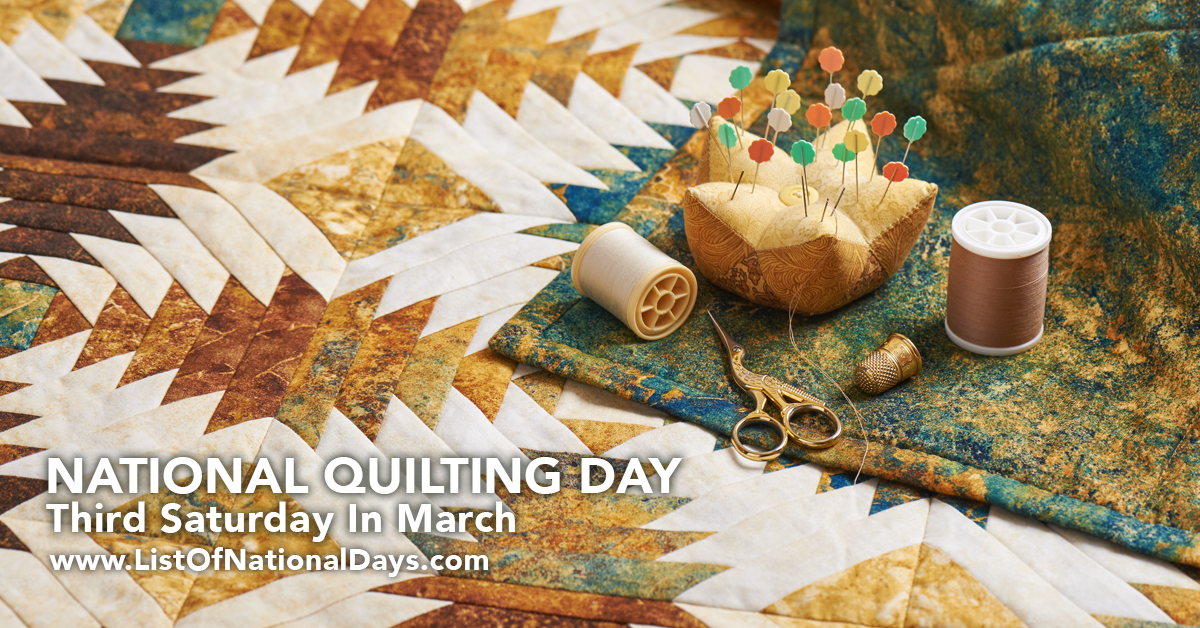
National Quilting Day is an annual holiday celebrated on the third Saturday in March to recognize the art and craft of quilt-making. It is a day for quilters to come together, share their passion, and create beautiful works of art.
#HASHTAGS
#NationalQuiltingDay
National Quilting Day is celebrated annually on the third Saturday In March.
National Agriculture Day is a day of recognition for farmers and their contributions to the economy and society. It is an annual event that celebrates the abundance and diversity of agriculture in the United States and the hard work of those who produce our food.
#HASHTAGS
#NationalAgricultureDay
National Agriculture Day is celebrated annually on March 21st.