International Sweater Vestival is a festival dedicated to celebrating the sweater vest as a fashion statement. It brings together enthusiasts from around the world to showcase, wear, and appreciate the versatility and style of this unique garment.
#HASHTAGS
#InternationalSweaterVestival
International Sweater Vestival is celebrated annually on the second Friday after Thanksgiving
Panic Saturday is a term used to describe a time before Christmas when shoppers frantically rush to buy last-minute gifts and finish their Christmas shopping. It is a day filled with stress, crowds, and long lines as people try to find the perfect Christmas presents.
#HASHTAGS
#PanicSaturda
Panic Saturda is celebrated annually on the Saturday before December 25th
Official Lost and Found Day is a day dedicated to celebrating the important service provided by lost and found resources in helping individuals reunite with their lost possessions.
#HASHTAGS
#OfficialLostandFoundDay
Official Lost and Found Day is celebrated annually on the second Friday in December
National Wreaths Across America Day is an annual event where wreaths are laid on the graves of veterans at cemeteries across the United States, as a way to honor and remember their sacrifice and service to the country.
#HASHTAGS
#NationalWreathsAcrossAmericaDay
National Wreaths Across America Day is celebrated annually on the third Saturday In December
Green Monday is an online shopping event that takes place on the second Monday of December, created as a response to Cyber Monday. It encourages consumers to shop sustainably and purchase eco-friendly products, while also offering discounts and promotions from participating retailers.
#HASHTAGS
#GreenMonday
Green Monday is celebrated annually on the second Monday in December
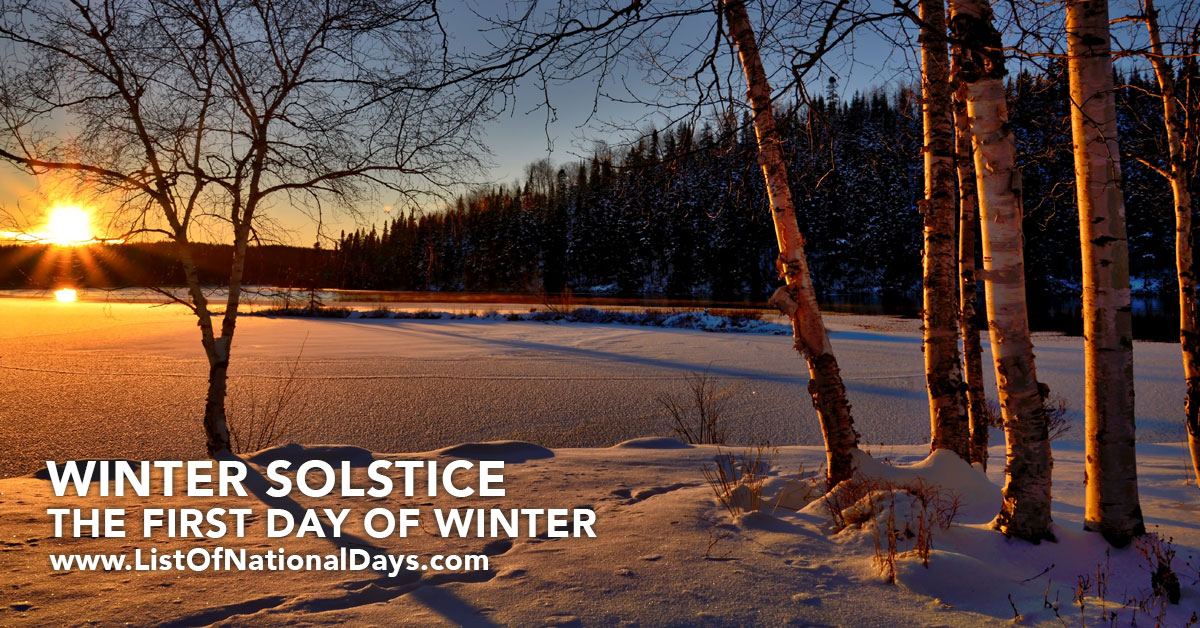
The Winter Solstice marks a powerful turning point in the year. It occurs each December and is the shortest day and longest night of the year in the Northern Hemisphere. While the darkness reaches its peak, the solstice also symbolizes renewal, rebirth, and the gradual return of light.
Celebrated for thousands of years across cultures and civilizations, the Winter Solstice has deep astronomical, spiritual, and cultural significance. From ancient stone monuments to modern mindfulness practices, this seasonal event continues to remind us of nature’s cycles and our connection to them.
What Is the Winter Solstice?
The Winter Solstice happens when the Earth’s axial tilt causes the Sun to reach its lowest and weakest point in the sky. This results in the fewest hours of daylight in the year.
Northern Hemisphere: Winter Solstice occurs around December 21–22
Southern Hemisphere: It occurs around June 20–21, marking the summer solstice there
After the solstice, daylight slowly begins to increase — a phenomenon celebrated as the return of the Sun.
The History and Ancient Origins of the Winter Solstice
The Winter Solstice has been observed for thousands of years, long before modern calendars existed. Ancient civilizations carefully tracked the Sun’s movement to understand seasons, agriculture, and survival.
Stonehenge (England): Aligned with the Winter Solstice sunset
Newgrange (Ireland): Built so that sunrise illuminates the inner chamber only on the solstice
Ancient Rome: Celebrated Saturnalia, a festival of feasting and light
Norse Cultures: Observed Yule, honoring rebirth and the Sun’s return
Indigenous Traditions: Marked the solstice with ceremonies tied to Earth and sky cycles
These celebrations emphasized hope, continuity, and the promise of renewal.
Spiritual Meaning of the Winter Solstice
Across belief systems, the Winter Solstice represents:
Rebirth and Renewal: Light begins its return after darkness peaks
Reflection: A time to pause, rest, and look inward
Transformation: Letting go of what no longer serves you
Hope: A reminder that brighter days are ahead
Many people see the solstice as a symbolic “new year of the soul,” a moment to reset intentions and welcome change.
Winter Solstice Traditions Around the World
Yule (Pagan and Norse Traditions)
Celebrates rebirth, nature, and the Sun with candles, evergreen décor, and Yule logs.
Dongzhi Festival (China & East Asia)
A celebration of balance and harmony, often marked by eating warm foods like dumplings or tangyuan.
Inti Raymi (Incan Tradition – Southern Hemisphere)
Honors the Sun god Inti during the June solstice.
Scandinavian Solstice Celebrations
Candles, fires, and communal gatherings symbolize warmth and light.
Modern Celebrations
Meditation, journaling, candle lighting, nature walks, and gratitude rituals.
How to Celebrate the Winter Solstice Today
Light Candles or a Fire Symbolize warmth, hope, and the return of longer days.
Spend Time in Nature Take a mindful walk and observe the season’s stillness.
Reflect and Set Intentions Journal about the past year and set goals for the coming months.
Create a Cozy Gathering Share a meal, hot drinks, and conversation with loved ones.
Decorate with Evergreens Pine, fir, and holly represent life enduring through winter.
Practice Gratitude Honor what sustained you through the year’s challenges.
Winter Solstice vs. Christmas: What’s the Connection?
Many Christmas traditions have roots in solstice celebrations, including:
Evergreen trees
Candles and lights
Feasting during the darkest time of year
As Christianity spread, existing solstice traditions were adapted into Christmas celebrations, blending ancient seasonal symbolism with religious meaning.
Fun Facts About the Winter Solstice
It is the only day when the Sun appears to stand still (from Latin solstitium).
After the solstice, days lengthen by just a few seconds at first.
Ancient civilizations used solstice markers as astronomical calendars.
The solstice does not always fall on the same date due to leap years and Earth’s orbit.
Many cultures view the solstice as the true beginning of the new year.
Why the Winter Solstice Still Matters Today
In a fast-paced, always-connected world, the Winter Solstice invites us to slow down. It’s a reminder that rest is necessary, darkness has purpose, and growth often begins quietly beneath the surface.
By honoring this natural pause, we reconnect with ancient wisdom and seasonal rhythms that support balance, resilience, and renewal.
#HASHTAGS
#WinterSolstice
Winter Solstice is celebrated annually on the Day Between December 20th And 23rd
Crate Day is a day celebrated in New Zealand on the first Saturday in December. It involves purchasing a crate of beer to drink with friends or family, often in a backyard or public park setting.
#HASHTAGS
#CrateDay
Crate Day is celebrated annually on the first Saturday in December
National Homeless Persons’ Remembrance Day is a day dedicated to honoring and remembering individuals who have experienced homelessness and have passed away. It aims to raise awareness about the struggles and vulnerability faced by homeless individuals and advocates for ending homelessness.
#HASHTAGS
#NationalHomelessPersonsRemembranceDay
National Homeless Persons’ Remembrance Day is celebrated annually on the first day of Winter
The First Day of Yule is a pagan holiday celebrated on the Winter Solstice around December 21st. It marks the beginning of the 12-day Yule festival, and is a time to honor the sun’s rebirth.
#HASHTAGS
#ThefirstdayofYule
The first day of Yule is celebrated annually on the first day of Winter
National Short Story Day is an annual celebration in the United Kingdom that promotes short story writing, reading and publishing. It falls on the shortest day of the year, December 21st, and aims to encourage people to embrace the art of short fiction and
#HASHTAGS
#NationalShortStoryDay
National Short Story Day is celebrated annually on the first day of Winter