International Day for the Total Elimination of Nuclear Weapons is observed on September 26th each year to raise awareness about the catastrophic humanitarian consequences of nuclear weapons and to advocate for their complete elimination. The day aims to promote global disarmament and to encourage all states to work towards a world free of nuclear weapons.
Seed Gathering Season is a time of year when people are encouraged to collect seeds from trees and other plants to grow new ones. It typically starts in late September and lasts through October in the UK. The event aims to promote the importance of trees, encourage reforestation, and increase biodiversity.
#HASHTAGS
#SeedGatheringSeasonStarts
Seed Gathering Season – Starts is celebrated annually on September 23rd
National Cooking Day is an annual holiday celebrated on September 25th. It is a day to celebrate the art and joy of cooking, and to encourage people to explore new recipes and flavors. Many people celebrate by cooking a special meal or trying out a new recipe, while others organize cooking events or share their culinary skills with others.
#HASHTAGS
#NationalCookingDay
National Cooking Day is celebrated annually on September 25th
National Mofongo Day is a holiday dedicated to the traditional Puerto Rican dish made with mashed plantains, garlic, and pork cracklings. The day promotes the cultural heritage and culinary richness of Puerto Rico and encourages people to try new recipes and flavors.
#HASHTAGS
#NationalMofongoDay
National Mofongo Day is celebrated annually on September 24th
National Open the Magic Day is a holiday celebrated on September 25th every year, dedicated to encouraging children and adults to discover the joy of reading and storytelling. The day promotes literacy, imagination, and creativity, inspiring people to explore the world of books and share the magic of stories with others.
#HASHTAGS
#NationalOpenTheMagicDay
National Open The Magic Day is celebrated annually on September 25th
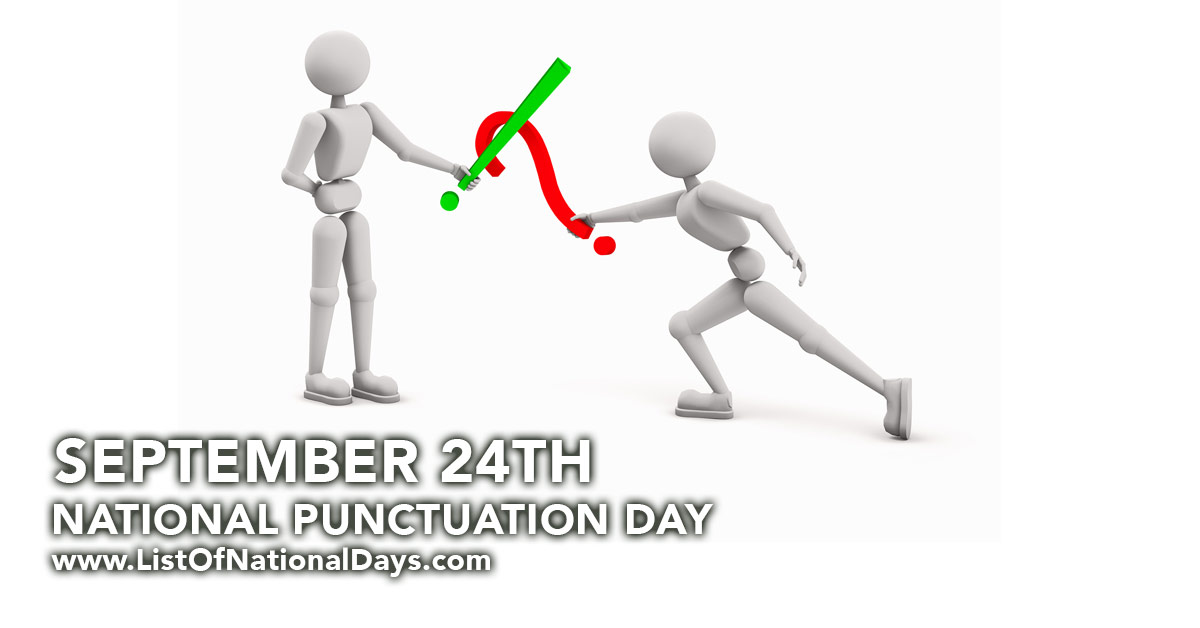
National Punctuation Day, celebrated annually on September 24th, is dedicated to the importance of proper punctuation in written communication. Whether you’re crafting an email, a story, or even a social media post, punctuation is crucial in ensuring clarity and meaning. From commas and periods to semicolons and colons, punctuation marks help structure sentences, separate ideas, and guide the reader through the text. On National Punctuation Day, we celebrate the art of punctuation, how it shapes our writing and its role in making language more effective and enjoyable.
The History of National Punctuation Day
National Punctuation Day was founded in 2004 by Jeffrey Rubin, a former newspaper editor and self-proclaimed punctuation enthusiast. Rubin wanted to highlight the importance of punctuation and encourage people to pay more attention to how they use punctuation marks in their writing. The day was designed to be fun and educational, making it an ideal occasion for individuals, schools, and organizations to reflect on how punctuation enhances communication.
Since its inception, National Punctuation Day has grown in popularity, with events, challenges, and lessons dedicated to improving punctuation awareness. The day serves as a reminder that punctuation is not just about following grammar rules but also about enhancing our ability to express thoughts clearly and effectively.
Why National Punctuation Day Matters
National Punctuation Day is important for several reasons. It serves as a reminder of how punctuation influences our writing and communication clarity. Here’s why this day is worth celebrating:
Promoting Clear Communication: Punctuation marks act as road signs for readers. They guide us through the text and help us understand where sentences begin and end, where ideas are separated, and where pauses should occur. Without proper punctuation, writing can be confusing and unclear. National Punctuation Day reminds us of the power of punctuation in effective communication.
Avoiding Ambiguity: Improper punctuation can lead to ambiguity, changing the meaning of a sentence entirely. For example, the sentence “Let’s eat, Grandma!” uses a comma to invite Grandma to eat, whereas “Let’s eat Grandma!” without the comma suggests something far less appetizing. National Punctuation Day encourages attention to detail to avoid such misunderstandings.
Enhancing Writing Skills: Celebrating National Punctuation Day allows writers—whether students, professionals, or casual bloggers—to brush up on their punctuation skills. Proper punctuation helps make writing more polished, professional, and easier to read, contributing to better overall writing.
Encouraging Grammar Awareness: National Punctuation Day raises awareness about the significance of grammar in written language. It promotes the idea that language is a tool for communication, and proper grammar and punctuation are vital for clear, effective, and respectful communication.
Celebrating Language and Literature: Punctuation is an essential part of language, and National Punctuation Day celebrates how punctuation marks have evolved to become an integral component of storytelling and expression. Writers and readers benefit from learning the nuances of punctuation, which helps elevate the reading experience.
The Most Common Punctuation Marks and Their Importance
To celebrate National Punctuation Day, it’s important to understand the different punctuation marks and their functions. Here’s a breakdown of some of the most common punctuation marks and their roles in writing:
Period (.): A period signals the end of a declarative sentence. It’s the most fundamental punctuation mark, helping to break up ideas and separate complete thoughts. Without periods, sentences would run together and become difficult to understand.
Comma (,): The comma is one of the most versatile punctuation marks. It’s used to separate items in a list, to set off introductory phrases, and to provide a pause within sentences for clarity. Commas are essential for breaking up complex ideas into digestible parts.
Question Mark (?): The question mark indicates the end of a direct question. It’s crucial for distinguishing between statements and inquiries. Without question marks, it would be unclear when someone is asking something.
Exclamation Point (!): This mark expresses strong emotion or emphasis. It’s often found in exclamatory sentences or commands. The exclamation point adds a sense of urgency or excitement to the writing.
Colon (:): The colon is often used to introduce lists, explanations, or direct quotations. It’s a way to signal to the reader that further elaboration is coming. Colons help structure sentences and provide clarity.
Semicolon (;): The semicolon connects closely related independent clauses. It’s often used when two ideas are linked but could stand alone as separate sentences. The semicolon can also be used in a list when the items are complex and contain commas.
Apostrophe (‘): The apostrophe is primarily used to indicate possession (e.g., Sarah’s book) or in contractions to show omitted letters (e.g., can’t for cannot). It’s important for showing ownership and making writing more concise.
Quotation Marks (“” ): Quotation marks are used to indicate direct speech, quotations, or the titles of shorter works. They’re essential for distinguishing someone’s words from the rest of the text.
Parentheses (()): Parentheses are used to provide additional information or clarification that isn’t essential to the sentence. They allow the writer to add supplementary details without interrupting the flow of the main idea.
Dash (—): The dash emphasizes or introduces additional information related to but separate from the main sentence. It can create a stronger pause than a comma or colon and is often used to make writing more dynamic.
How to Celebrate National Punctuation Day
National Punctuation Day is a fun opportunity to learn more about punctuation, share tips with others, and improve writing skills. Here are some creative ways to celebrate the day:
Read a Book About Punctuation: If you want to explore punctuation more deeply, read a book that explains its rules and history. Many educational books are available that make learning punctuation both enjoyable and insightful.
Host a Punctuation Quiz or Challenge: Organize a punctuation quiz with friends, family, or colleagues. You can test each other’s knowledge of punctuation rules, offer prizes for correct answers, and make learning about punctuation fun.
Write a Punctuation-Themed Story: Celebrate the day by writing a short story or poem focusing on using punctuation correctly. Challenge yourself to experiment with different punctuation marks and notice how they change the flow and meaning of your writing.
Teach Punctuation to Others: If you’re a teacher, use National Punctuation Day to engage your students in discussions and activities about punctuation. You can have fun lessons, games, and exercises that help students understand how to use punctuation effectively in their writing.
Share Punctuation Tips on Social Media: Use your social media platforms to share interesting punctuation tips, fun facts, or common punctuation mistakes. Create engaging posts or infographics that help educate others about the importance of punctuation.
Review Your Writing: Take time on National Punctuation Day to review your writing and see if you’ve been using punctuation correctly. Whether it’s an email, blog post, or a personal letter, this is a good day to double-check your punctuation to ensure clarity and readability.
Create a Punctuation Poster: Make a colorful and informative poster highlighting the different punctuation marks and their uses. Hang it in your classroom, office, or home to remind yourself and others about the importance of punctuation in effective communication.
#HASHTAGS
#NationalPunctuationDay
National Punctuation Day is celebrated annually on September 24th
National Comic Book Day is a holiday observed annually on September 25th. It is a day to celebrate the art, culture, and impact of comic books, which have entertained and inspired generations of readers. The day encourages people to read, collect, and appreciate comic books as a unique and valuable form of storytelling and graphic art.
#HASHTAGS
#NationalComicBookDay
National Comic Book Day is celebrated annually on September 25th
National Food Service Employee Day is observed on the 25th of September every year to recognize and appreciate the hard work and dedication of food service employees. The day aims to honor the important role they play in providing meals and service to customers, and to encourage people to express gratitude and show support for these essential workers.
#HASHTAGS
#NationalFoodServiceEmployeeDay
National Food Service Employee Day is celebrated annually on September 25th
National Daughters Day, celebrated on September 25th each year, is a heartwarming occasion dedicated to honoring the bond between parents and their daughters. This day allows families to reflect on the importance of daughters in their lives, celebrate their love and joy, and show appreciation for the unique relationship between a parent and a daughter. From playful moments to life-changing milestones, daughters hold a special place in the hearts of their families, and National Daughters Day is the perfect occasion to express love, gratitude, and admiration.
The History of National Daughters Day
National Daughters Day is a relatively modern celebration, and its origins are unclear. However, the day has gained traction over time due to its heartfelt and inclusive message, which is focused on appreciating the women and girls who are daughters. The celebration started as a grassroots movement and quickly spread through social media as families and individuals embraced the idea of dedicating a special day to their daughters.
Though National Daughters Day is not as widely recognized as other holidays, it has grown in popularity with time, thanks to social media campaigns and family-oriented events. The day complements the widely known Mother’s Day and Father’s Day, offering an opportunity to focus specifically on the parent-daughter relationship and providing a dedicated time to celebrate daughters’ unique role within families and communities.
Why National Daughters Day Matters
National Daughters Day is significant for several reasons. It provides an opportunity for reflection, connection, and appreciation. Here’s why this day is important:
Celebrating the Parent-Daughter Bond: National Daughters Day is a time to acknowledge and celebrate the deep, loving connection between parents and daughters. This special bond shapes parents and daughters and contributes to a family’s emotional development. Whether a mother and daughter or a father and daughter, the relationship is often filled with shared memories, guidance, and mutual respect.
Recognizing the Impact of Daughters: Daughters play essential roles in families and communities. They are daughters but also friends, sisters, and future leaders. National Daughters Day offers a chance to recognize daughters’ impact on the world around them. It’s an opportunity to reflect on their growth, achievements, and how they inspire their parents.
Strengthening Family Connections: National Daughters Day encourages parents and families to spend quality time together, whether through a simple meal, meaningful conversation, or fun activities. Celebrating this day strengthens family relationships and fosters a sense of unity and closeness within the household.
Promoting Gender Equality: While the celebration is focused on daughters, it also brings attention to the importance of empowering and supporting women and girls everywhere. National Daughters Day helps promote gender equality, encouraging a world where daughters are equally valued and given the same opportunities as their male counterparts.
Inspiring Gratitude and Appreciation: Sometimes, life gets busy, and we forget to thank those who mean the most to us. National Daughters Day is an opportunity to pause and reflect on the many blessings that daughters bring into our lives. It encourages parents to show appreciation for their daughters, which can have a lasting positive impact on both parties.
The Parent-Daughter Bond: A Unique Relationship
The relationship between parents and daughters is a beautiful and complex one. Whether you are a father, mother, or daughter, there’s something extraordinary about the connection you share. Let’s look at how this bond plays out in different ways:
A Mother and Daughter Relationship: The mother-daughter bond is one of a family’s most iconic and special connections. Shared experiences, advice, and a deep emotional connection characterize this relationship. Mothers are typically there to nurture, guide, and offer support through life’s challenges. As daughters grow older, the relationship can evolve into a partnership where both women offer advice, support, and wisdom to one another.
A Father and Daughter Relationship: The father-daughter bond is unique in its own right. Fathers are often seen as protectors, role models, and supporters, offering their daughters guidance, love, and strength. This relationship is instrumental in shaping a daughter’s self-esteem, sense of security, and understanding of what it means to be unconditionally loved. Fathers also provide a different perspective on life, often encouraging daughters to dream big and take risks.
The Influence of Siblings: Daughters benefit from the bond with their parents and their siblings. Whether a daughter has brothers or sisters, these relationships shape her understanding of family dynamics, teamwork, and empathy. National Daughters Day is a wonderful opportunity to acknowledge siblings’ role in supporting and shaping each other’s lives.
How to Celebrate National Daughters Day
Celebrating National Daughters Day doesn’t require grand gestures—minor acts of love and appreciation can often mean the most. Here are some meaningful ways to celebrate the day:
Write a Heartfelt Letter: Words are among the most personal and meaningful ways to show appreciation. Write a letter to your daughter expressing your love, gratitude, and admiration. Reflect on her growth and the qualities that make her special. This letter will be a cherished keepsake for years to come.
Spend Quality Time Together: Whether it’s a movie night, a nature walk, or a trip to a favorite restaurant, National Daughters Day is a perfect occasion to spend quality time with your daughter. Make memories by doing something she loves, whether a shared hobby or simply talking about life. This strengthens the emotional bond between you and creates lasting memories.
Give a Thoughtful Gift: A gift doesn’t have to be expensive; the thought counts. Whether it’s a book, a piece of jewelry, or something she’s been wanting, National Daughters Day is a great time to show appreciation through a meaningful gift that reflects her personality and interests.
Create a Tradition: Establish a new tradition for National Daughters Day, such as a special family meal, a photo session, or a family outing. These traditions can be continued year after year and will provide an opportunity to celebrate and bond with your daughter as she grows older.
Share Family Stories: Take the opportunity to share family stories and memories with your daughter. This could involve telling her about your childhood, family history, or significant moments in your life. These stories help build a deeper connection and offer insights into the family legacy.
Support a Cause: National Daughters Day is also an excellent opportunity to support causes that promote the well-being of daughters and girls everywhere. You can donate to organizations that focus on women’s rights, girls’ education, or gender equality, ensuring that daughters in all parts of the world have access to the opportunities and support they need to thrive.
The Global Significance of National Daughters Day
Though National Daughters Day is primarily celebrated in the United States, its message resonates globally. The bond between parents and daughters is universal, and many cultures worldwide place high value on the relationship between fathers, mothers, and their daughters. Similar observances or celebrations exist in some countries to honor daughters and their societal role.
Across the globe, societies slowly recognize the importance of nurturing daughters’ potential and empowering them to achieve their goals. National Daughters Day reminds us how vital it is to honor and invest in daughters’ lives everywhere.
#HASHTAGS
#NationalDaughtersDay
National Daughters Day is celebrated annually on September 25th
Dia de la Quesadilla is a Mexican holiday dedicated to celebrating one of the country’s most beloved dishes, the quesadilla. It’s an opportunity to indulge in the cheesy and savory flavors of the dish and share it with others. The day is marked by various events and activities that showcase the different types and variations of quesadillas.
#HASHTAGS
#DiaDeLaQuesadilla
Dia De La Quesadilla is celebrated annually on September 25th