Uncle Sam Day is an annual observance held on September 13th to honor Samuel Wilson, the man believed to be the inspiration for the iconic American symbol Uncle Sam. Uncle Sam is a personification of the United States and is often depicted as a tall, thin man with a white beard wearing a top hat and patriotic clothing.
#HASHTAGS
#UncleSamDay
Uncle Sam Day is celebrated annually on September 13th
National Police Woman Day, observed on September 12th, is a day to celebrate the women who serve in law enforcement and recognize their valuable contributions to public safety. Men traditionally dominate law enforcement, but women have made significant strides in breaking down barriers and establishing themselves as key players in maintaining peace and order in communities. National Police Woman Day serves as an opportunity to honor these dedicated professionals for their courage, commitment, and service while also promoting gender equality within the law enforcement sector.
The History of National Police Woman Day
National Police Woman Day was established to commemorate the first-ever female police officer in the United States. In 1910, Alice Stebbins Wells became the first woman appointed to a full-time, paid police position in the United States. The Los Angeles Police Department hired her and was instrumental in pioneering the role of women in law enforcement. Wells’ appointment was groundbreaking, challenging traditional gender roles that limited women’s involvement in public service jobs. Over the years, women have made significant progress in law enforcement, contributing their unique skills and perspectives to improve policing and community relations.
In 1987, the National Association of Women Law Enforcement Executives (NAWLEE) recognized the need to celebrate the growing presence of women in law enforcement. National Police Woman Day was created to honor the contributions of female officers and highlight their integral role in shaping the future of policing. The day is not only a time to reflect on the achievements of women in the field but also an opportunity to inspire future generations of women to pursue careers in law enforcement.
Why National Police Woman Day Matters
National Police Woman Day is important because it acknowledges the challenges women face in a male-dominated profession while celebrating the significant progress they have made in reshaping the landscape of law enforcement. Here’s why this day matters:
Recognizing the Contributions of Women in Law Enforcement: Women have always played a vital role in law enforcement, from patrol officers to detectives, investigators, and executives. National Police Woman Day is a chance to highlight the hard work, dedication, and sacrifices women make daily to keep their communities safe. It’s also an opportunity to celebrate their achievements, from breaking barriers to excelling in their roles and serving as leaders in their field.
Promoting Gender Equality in Law Enforcement: Law enforcement has historically been male-dominated, but women have steadily made inroads into all areas of policing. National Police Woman Day reminds us of the importance of gender equality in law enforcement and the need for more women to be represented in leadership positions within police departments. Equal representation helps ensure that policing reflects the diverse communities officers serve, fostering better communication and trust between law enforcement and the public.
Highlighting the Importance of Role Models: Female officers serve as role models for young women and girls who aspire to work in law enforcement or other traditionally male-dominated professions. By honoring women in law enforcement on National Police Woman Day, we inspire future generations of women to pursue careers in policing, law enforcement leadership, and public service.
Addressing the Challenges Faced by Women in Policing: Women in law enforcement face unique challenges, such as overcoming stereotypes, navigating biases, and breaking through the “glass ceiling” to reach leadership positions. National Police Woman Day brings attention to these challenges while acknowledging the resilience and determination of women who have excelled in their careers despite these obstacles.
Building Stronger Communities Through Diversity: Research shows that diverse police forces lead to better community relations, increased trust, and improved public safety. National Police Woman Day highlights the importance of diversity in law enforcement, not just in terms of gender but also race, ethnicity, and background. By embracing diversity, law enforcement agencies can better serve and understand the needs of the communities they protect.
The Challenges Faced by Women in Law Enforcement
While women have made great strides in law enforcement, they still face several challenges that can hinder their success in the field. These challenges include:
Gender Stereotypes and Bias: Women in law enforcement often have to contend with stereotypes about their physical strength, abilities, and emotional resilience. Some may face discrimination or doubt from colleagues, superiors, or members of the public who believe that women are less capable than their male counterparts. Overcoming these stereotypes requires persistence, determination, and support from other officers and the community.
Balancing Work and Family: Like women in many professions, female officers often face challenges balancing their career demands with family responsibilities. Irregular shifts, night shifts, and the physical and emotional toll of the job can make it difficult for women to maintain a work-life balance. Supportive policies, such as family leave and flexible scheduling, are crucial in helping women succeed in law enforcement.
Limited Representation in Leadership Roles: While the number of women in law enforcement has grown, they remain underrepresented in leadership positions. More women must rise through the ranks and serve as leaders in law enforcement agencies, as diverse leadership teams are essential for effective decision-making, policy development, and community engagement.
Safety Concerns: Female officers may also face increased risks to their safety due to their physical differences compared to their male counterparts. This can lead to concerns about personal safety while on duty, especially in high-risk situations. Law enforcement agencies need to ensure that female officers have the proper training, equipment, and support to handle the job demands safely.
How to Celebrate National Police Woman Day
National Police Woman Day is a time to reflect on the invaluable contributions of women in law enforcement, celebrate their achievements, and raise awareness about the ongoing challenges they face. Here are some ways to observe and celebrate the day:
Educate Others: Use social media, blogs, or community meetings to share the history and impact of women in law enforcement. Highlight the achievements of notable female officers and emphasize the importance of gender equality in policing.
Recognize Female Officers in Your Community: Take the time to thank and acknowledge the women in law enforcement who serve your community. Whether it’s a simple thank-you note, a social media post, or an appreciation event, showing gratitude can make a difference in their day.
Attend or Host an Event: Many law enforcement agencies and community organizations host events to celebrate National Police Woman Day. These events can include guest speakers, training sessions, or awards ceremonies. If there is no event in your area, consider hosting one to raise awareness and recognize the achievements of women in law enforcement.
Support Female Law Enforcement Initiatives: Many organizations, such as the National Association of Women Law Enforcement Executives (NAWLEE), work to support women in law enforcement through advocacy, networking, and training programs. Consider donating, volunteering, or getting involved in initiatives that promote gender equality and empower women in law enforcement.
Promote Mentorship and Networking: Female officers can benefit significantly from mentorship and networking opportunities. On National Police Woman Day, consider supporting or organizing a mentorship program to help guide and support younger women entering the field.
#HASHTAGS
#NationalPoliceWomanDay
National Police Woman Day is celebrated annually on September 12th
Supernatural Day is an annual event celebrated on September 13th, honoring the popular television series, Supernatural. The day commemorates the show’s premiere on September 13th, 2005, and celebrates its dedicated fan base and enduring popularity. Fans of the series around the world celebrate the day by sharing their favorite moments, quotes, and merchandise related to the show.
#HASHTAGS
#SupernaturalDay
Supernatural Day is celebrated annually on September 13th
Roald Dahl Day is an annual event celebrated on September 13th, the birthday of the beloved children’s author. The day honors Dahl’s life and works, encouraging people of all ages to read his books and celebrate his creativity and imagination. It’s a day to inspire a love of reading and to remember the lasting impact of Dahl’s stories.
#HASHTAGS
#RoaldDahlDay
Roald Dahl Day is celebrated annually on September 13th
Bald Is Beautiful Day is a day that celebrates the beauty and confidence of people who are bald by choice or by circumstance. It’s an opportunity to embrace baldness as a natural and unique physical trait and challenge beauty standards that prioritize hair as a symbol of attractiveness. The day is marked by various events and activities that promote self-love, acceptance, and empowerment.
#HASHTAGS
#BaldIsBeautifulDay
Bald Is Beautiful Day is celebrated annually on September 13th
National Report Medicare Fraud Day is observed on March 12th to raise awareness about Medicare fraud and encourage people to report any suspicious activity. The day also aims to educate the public about how to protect themselves from healthcare fraud and abuse. Reporting fraud helps prevent the loss of taxpayer dollars and ensures that Medicare services are provided to those who need them most.
#HASHTAGS
#NationalReportMedicareFraudDay
National Report Medicare Fraud Day is celebrated annually on September 12th
Positive Thinking Day is an annual event celebrated on September 13th to promote positivity and optimism. It’s a day to focus on the power of positive thinking, to inspire and motivate people to look for the good in all situations, and to develop a positive mindset.
#HASHTAGS
#PositiveThinkingDay
Positive Thinking Day is celebrated annually on September 13th
National No News Is Good News Day is a holiday encouraging people to take a break from the constant barrage of news and media and enjoy a day of relaxation and peace. The day promotes mindfulness, gratitude, and self-care, reminding people to focus on the positive aspects of life.
#HASHTAGS
#NationalNoNewsIsGoodNewsDay
National No News Is Good News Day is celebrated annually on September 11th
White Balloon Day is an annual event in Australia that raises awareness about child sexual abuse and supports survivors. The day is marked by the sale and display of white balloons, symbolizing the innocence of children and the need to protect them from harm. Schools, businesses, and community groups participate in White Balloon Day by holding fundraising events, educational programs, and social media campaigns to raise awareness and support for survivors.
#HASHTAGS
#WhiteBalloonDay
White Balloon Day is celebrated annually on September 10th
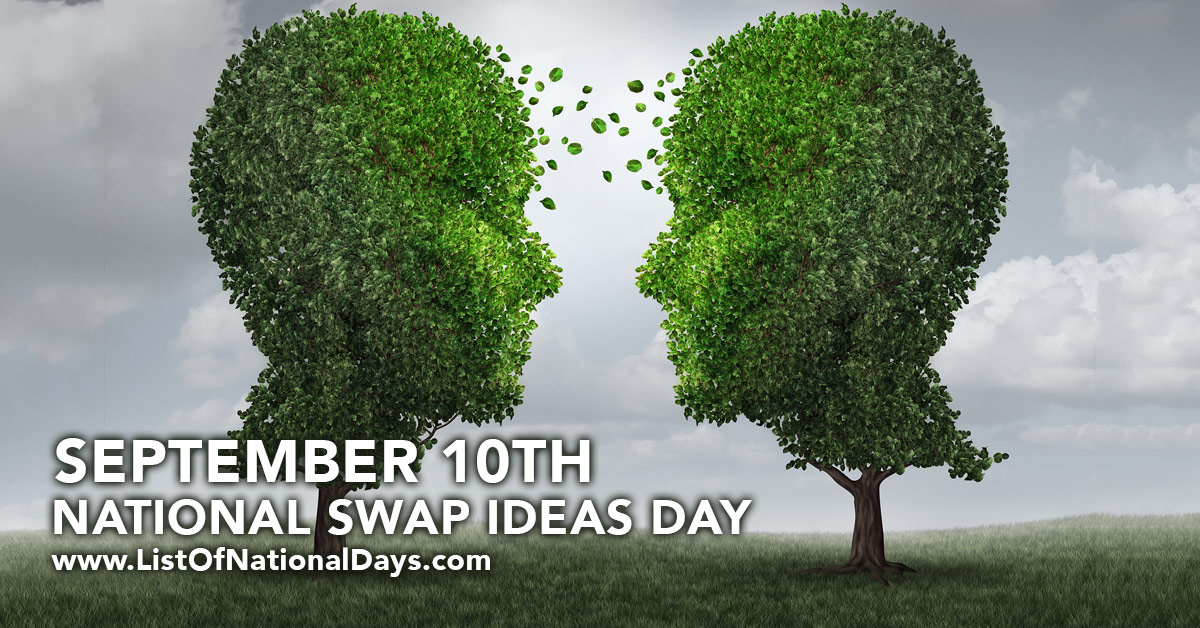
National Swap Ideas Day is a holiday celebrated annually on September 10th. The day encourages people to share their creative and innovative ideas with one another. It’s a day to collaborate, brainstorm, and exchange knowledge, and to foster creativity and growth in both personal and professional settings.
#HASHTAGS
#NationalSwapIdeasDay
National Swap Ideas Day is celebrated annually on September 10th