Jack Johnson was born on March 31, 1878, Galveston, TX
"Official List" of U.S. National Days
Lunar phases occur because of the Moon’s orbit around Earth and how sunlight illuminates it. The Moon doesn’t produce its own light; instead, it reflects sunlight. As the Moon orbits Earth, we see varying amounts of its illuminated half, creating phases that change over about 29.5 days, known as the lunar month.
The New Moon marks the start of a new lunar cycle, with the Moon positioned between Earth and the Sun, making it invisible from Earth. It’s a time symbolizing new beginnings, introspection, and intention-setting, often celebrated in cultural rituals and ideal for astronomical observations due to the absence of moonlight.
The Waxing Crescent Moon appears shortly after the New Moon, showing a sliver of light as it begins to grow. This phase symbolizes growth and potential, inspiring people to act on intentions. It’s often seen as a time for nurturing ideas and preparing for further development in the lunar cycle.
The First Quarter Moon marks a halfway point between the New Moon and Full Moon, showing half of its illuminated side. This phase represents decision-making, challenges, and progress, urging action to overcome obstacles. It’s an ideal time to assess goals, make adjustments, and strengthen commitment to set intentions.
The Waxing Gibbous Moon appears just before the Full Moon, nearly fully illuminated. This phase represents refinement, patience, and preparation, as intentions set earlier come closer to fruition. It’s a time to focus on details, address remaining challenges, and make final adjustments before reaching the peak energy of the Full Moon.
The Full Moon is when the Moon is fully illuminated, symbolizing completion, clarity, and heightened energy. It’s a time to celebrate achievements, release what no longer serves, and gain insight. Many cultures hold rituals during this phase, viewing it as a powerful period for reflection, gratitude, and transformation.
The Waning Gibbous Moon appears after the Full Moon, as light gradually diminishes. This phase symbolizes gratitude, introspection, and sharing wisdom. It’s a time for reflection on recent achievements and learning from experiences. The waning energy encourages release and letting go, making space for new growth in the lunar cycle.
The Third Quarter Moon, halfway between the Full Moon and New Moon, shows half its illuminated side waning. This phase represents release, forgiveness, and reflection, encouraging letting go of what no longer aligns. It’s a period for introspection, clearing emotional clutter, and preparing for a fresh start ahead.
The Waning Crescent Moon, just before the New Moon, shows a sliver of light as it fades. This phase represents surrender, rest, and closure, urging reflection on past cycles. It’s a time to recharge, release lingering negativity, and prepare for the renewal and fresh beginnings that come with the New Moon.
the Philippines’ rich culinary history and highlights its wide array of delicious dishes.
Filipino cuisine blends various cultural influences, reflecting the country’s rich history and diversity. With centuries of culinary evolution, it combines Malay, Chinese, Spanish, and American flavors. Signature dishes like the Lumpia, Pacit and Halo Halo delight people taste buds the world over.
Introduced in 2018, National Filipino Food Month spotlights the country’s cuisine while also boosting tourism. The goal is to raise awareness of Filipino dishes, inspire culinary innovation, and honor the contributions of Filipino chefs and restaurant owners around the world.
Food festivals, cooking contests, and various culinary events are held around the world throughout the month. Restaurants participate by showcasing special menus and offering promotions. Food tours, workshops, and seminars also cater to casual foodies and culinary professionals, providing unique experiences and insights into Filipino cooking.
National Filipino Food Month is not just about food; it’s an opportunity to celebrate the Philippines’ cultural roots. Filipino cuisine is deeply connected to the world’s history and traditions, reflecting its people’s resourcefulness, creativity, and warmth.
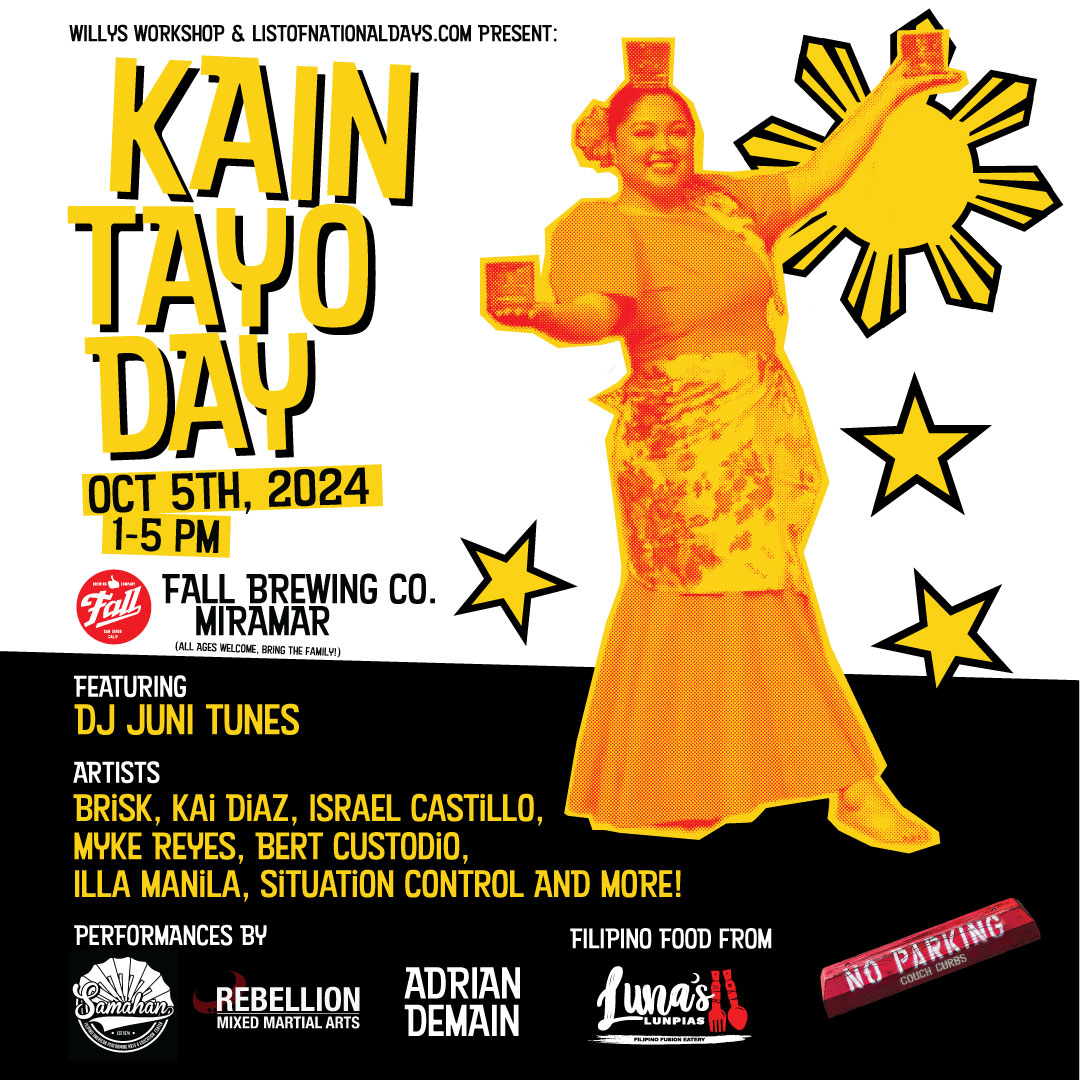
Kain Tayo! October is Filipino American History Month and Kain Tayo Day is a day to celebrate Filipino food and culture. Come join us Saturday, October 5th at Fall Brewing (Miramar location) from 1pm-5pm. Beat the heat and grab a beverage while enjoying some Filipino Fusion cuisine. There will be live music, local Filipino artists and vendors and traditional dancing and martial arts performances and so much more! This is an all ages event.
Fall Brewing
9550 Distribution Ave, San Diego, CA 92121
on Oct 5th from 1pm-5 pm
All ages welcome! Bring the family!
DJ:
Juni Tunes
Food:
Luna’s Lunpias
Myke Reyes
Performances:
Samahan Dance
Brought to you by:

Zozobra Day is an annual event celebrated in Santa Fe, New Mexico, as part of the city’s larger Fiesta de Santa Fe. It typically takes place on the Friday before Labor Day and involves the burning of a giant effigy called “Zozobra,” also known as “Old Man Gloom.” The event is one of the oldest and most unique traditions in Santa Fe, dating back to 1924.

Diwali is one of the most important and widely celebrated festivals in the world. Known as the Festival of Lights, Diwali represents the triumph of light over darkness, good over evil, and knowledge over ignorance. Celebrated by millions across India and globally, Diwali is a time for joy, reflection, generosity, and new beginnings.
Marked by glowing oil lamps (diyas), colorful rangoli, fireworks, family gatherings, and festive meals, Diwali is more than a holiday — it’s a powerful cultural and spiritual celebration that brings people together across religions, regions, and generations.
Diwali is a five-day festival celebrated primarily by Hindus, Sikhs, Jains, and some Buddhists. While traditions vary by region and community, the core theme remains the same: the victory of light, hope, and righteousness.
The word “Diwali” comes from the Sanskrit term Deepavali, meaning “a row of lights.” Homes, temples, streets, and businesses are illuminated with lamps and candles to symbolize inner light and positive energy.
Diwali holds different meanings across faiths and regions:
These diverse interpretations highlight Diwali’s universal message of spiritual awakening and renewal.
Homes are decorated with oil lamps, candles, and fairy lights to invite positivity and prosperity.
Colorful patterns made from colored powder, rice, or flowers are created at entrances to welcome guests and good fortune.
Families perform Lakshmi Puja, seeking blessings for wealth, health, and success.
Traditional treats include laddoos, barfi, jalebi, gulab jamun, and savory snacks shared with loved ones.
Fireworks light up the sky, symbolizing joy and celebration (with increasing emphasis on eco-friendly alternatives).
Exchanging gifts, sweets, and greeting cards strengthens bonds and spreads goodwill.
Diwali is celebrated in countries such as India, Nepal, Sri Lanka, Malaysia, Singapore, Fiji, the UK, Canada, and the United States. Many cities host public Diwali festivals, fireworks displays, cultural performances, and educational events, reflecting its growing global significance.
Diwali is a celebration of hope, unity, and renewal. Whether through lighting lamps, sharing meals, giving gifts, or reflecting on personal growth, the Festival of Lights encourages people everywhere to embrace positivity and compassion.
As homes glow with warmth and hearts fill with gratitude, Diwali reminds us that even the smallest light can illuminate the darkest path.
What is Diwali also called?
Diwali is also known as Deepavali, meaning “row of lights.”
When is Diwali celebrated?
Diwali falls between October and November, depending on the lunar calendar.
Who celebrates Diwali?
Diwali is celebrated by Hindus, Sikhs, Jains, Buddhists, and communities worldwide.
What does Diwali symbolize?
It symbolizes the victory of light over darkness, good over evil, and knowledge over ignorance.
How can Diwali be celebrated respectfully?
Learn about its meaning, participate in cultural traditions, support local celebrations, and choose eco-friendly practices.

Eid al-Fitr is an Islamic holiday that marks the conclusion of Ramadan, the holy month of fasting observed by Muslims worldwide. “Eid al-Fitr” translates to “Festival of Breaking the Fast.” Eid al-Fitr celebrated is on the first day of Shawwal, the tenth month of the Islamic lunar calendar.

National Ube Day is celebrated annually on June 12th, coinciding with the Philippines’ Independence Day. Ube, a yam native to the Philippines, is a popular ingredient in a variety of desserts and sweet dishes.
#ubeday
National Ube Day is celebrated annually on June 12th
| Year | Day | Date |
| 2024 | Wednesday | June 12 |
| 2025 | Thursday | June 12 |
| 2026 | Friday | June 12 |
| 2027 | Saturday | June 12 |
| 2028 | Monday | June 12 |
| 2029 | Tuesday | June 12 |
| 2030 | Wednesday | June 12 |
| 2031 | Thursday | June 12 |
| 2032 | Saturday | June 12 |
| 2033 | Sunday | June 12 |
| 2034 | Monday | June 12 |
| 2035 | Tuesday | June 12 |
See Also:
Filipino American History Month, Fellowpino Day, Kain Tayo, Filipino-American Friendship Day, Filipino Adobo Day, Pancit Day, Lumpia Day, Philippines’s National Day