National Custodial Workers Recognition Day is observed on October 2nd to honor and appreciate the hard work and dedication of custodial workers who ensure that our workplaces, schools, hospitals, and public spaces are clean, safe, and healthy. It is a day to thank them for their tireless efforts and acknowledge their contribution to society.
#HASHTAGS
#NationalCustodialWorkersRecognitionDay
National Custodial Workers Recognition Day is celebrated annually on October 2nd
National Name Your Car Day is an unofficial holiday celebrated on October 2nd every year. It’s a day to show appreciation for your car by giving it a name, as many car owners believe that their vehicles have unique personalities and deserve a special designation. Some people even hold naming ceremonies and decorate their cars with their new monikers.
#HASHTAGS
#NationalNameYourCarDay
National Name Your Car Day is celebrated annually on October 2nd
International Day of Non-Violence, observed annually on October 2nd, is a global celebration dedicated to promoting peace, non-violence, and the values of tolerance, respect, and understanding. This important day was established to honor the legacy of Mahatma Gandhi, a leader who championed non-violence as a powerful tool for social and political change. This observance reminds people worldwide of the enduring power of peaceful resistance and the need to resolve conflicts without violence.
The History of International Day of Non-Violence
International Day of Non-Violence was officially established by the United Nations General Assembly in 2007. It was chosen to coincide with Mahatma Gandhi’s birthday, October 2nd, as he is widely recognized as one of the most influential advocates of non-violence and peaceful resistance. Gandhi’s philosophy of Satyagraha (meaning “truth force” or “soul force”) emphasized that non-violence was not just a political tool but a way of life—a commitment to truth, justice, and peace without the use of violence.
While the UN first proclaimed the day in 2007, it was not until 2008 that the first International Day of Non-Violence was officially observed. The day’s goal is to raise awareness of the principles of non-violence, promote a culture of peace, and encourage peaceful conflict resolution at local, national, and global levels. It serves as a reminder that non-violence is a core value that should guide all our interactions—personal, social, or political.
Why International Day of Non-Violence Matters
International Day of Non-Violence is essential in raising awareness about resolving conflicts without resorting to violence. Here’s why this day is so crucial:
Promoting Peaceful Solutions: Violence has long-lasting negative consequences for individuals, communities, and entire nations. International Day of Non-Violence emphasizes the importance of finding peaceful ways to address conflicts, whether they arise in personal relationships, communities, or on the global stage. Non-violent approaches to problem-solving encourage understanding, dialogue, and empathy, which are essential for building stronger, more harmonious societies.
Celebrating the Legacy of Mahatma Gandhi: Gandhi’s contributions to peace and social justice are still felt worldwide today. By observing this day, we honor his principles and reflect on how non-violence can continue to be a force for positive change. Gandhi’s leadership in the Indian independence movement was characterized by his commitment to peaceful civil disobedience, which inspired countless other movements for justice and equality.
Encouraging Tolerance and Respect: One of the key tenets of nonviolence is respecting others’ perspectives and peacefully coexist. The International Day of Nonviolence encourages us to build a culture of tolerance, where differences are celebrated, and everyone is treated with dignity and respect. Promoting tolerance can help reduce prejudice, discrimination, and division, contributing to more inclusive and cohesive societies.
Raising Awareness About Global Issues: The day provides an opportunity to highlight the role of non-violence in addressing some of the most pressing global challenges. Whether it’s armed conflict, political oppression, or social injustice, non-violence can be a transformative tool for creating positive change. It serves as a reminder that peaceful protests, negotiations, and dialogue can be powerful alternatives to violent action.
Fostering a Culture of Peace: The observance of International Day of Non-Violence is a call to action for individuals, governments, organizations, and communities to commit to creating a more peaceful world. From grassroots initiatives to international peace agreements, this day encourages us to contribute to building a culture of peace at all levels of society.
How to Observe International Day of Non-Violence
There are many meaningful ways to observe International Day of Non-Violence, whether you’re an individual, a member of a community, or a business. Here are some ideas for how to promote peace, understanding, and non-violence:
Participate in Peaceful Events and Marches: Many cities and organizations host events commemorating International Day of Non-Violence. Participate in peaceful marches, protests, or gatherings that promote non-violence, peace, and tolerance. These events provide opportunities for communities to unite and show solidarity in the fight against violence.
Educate Yourself and Others About Non-Violence: Take the time to learn more about the principles of non-violence and how they can be applied in different aspects of life. Read books, watch documentaries, or attend lectures exploring the non-violence philosophy. Share this knowledge with friends, family, or colleagues to inspire them to adopt peaceful approaches to conflict resolution.
Support Organizations That Promote Non-Violence: Many organizations, from grassroots organizations to global institutions, promote non-violence and peace. Consider donating to or volunteering with these organizations on International Day of Non-Violence. Some notable groups include Peace Direct, The International Campaign for Non-Violent Resistance, and Nonviolence International.
Practice Nonviolence in Your Daily Life: Nonviolence starts with individual actions. On this day, make a conscious effort to embody the principles of nonviolence in your everyday life. This can involve speaking kindly to others, resolving conflicts peacefully, and practicing empathy in your interactions. Show tolerance and respect for the differences that make each person unique.
Create or Join Dialogue Sessions: Organize or participate in a community discussion about non-violence, conflict resolution, and peacebuilding. These discussions raise awareness and foster meaningful conversations about how individuals and communities can adopt peaceful solutions to challenges.
Use Social Media to Spread the Message of Non-Violence: Social media can be a powerful tool to promote peace—share quotes, articles, or videos highlighting non-violence’s importance. Use hashtags like #NonViolenceDay, #PeacefulWorld, or #InternationalDayOfNonViolence to join the global conversation and encourage others to embrace non-violence.
Celebrate Gandhi’s Legacy: Reflect on Mahatma Gandhi’s life and teachings by learning more about his nonviolence and civil disobedience philosophy. You could watch a documentary about his life, read his writings, or even participate in a group reading or discussion of his most famous works, such as his autobiography or his principles of Satyagraha.
The Global Impact of Non-Violence
Non-violence has had a profound impact on global movements throughout history. From Gandhi’s role in India’s independence movement to Martin Luther King Jr.’s leadership during the Civil Rights Movement in the United States, non-violence has been an effective and transformative force for social change. It has inspired movements that aim to address social, political, and economic injustices through peaceful resistance, highlighting the power of peaceful protest to challenge oppressive systems.
In addition to its historical importance, nonviolence plays a crucial role in modern-day conflicts. As many parts of the world experience ongoing violence and unrest, the principles of nonviolence offer a hopeful and constructive alternative for conflict resolution. From political leaders to everyday citizens, embracing nonviolence can help foster a world where peace and understanding prevail.
#HASHTAGS
#InternationalDayOfNonViolence
International Day Of Non-Violence is celebrated annually on October 2nd
Community Media Day is an annual event celebrated on October 20th to recognize and celebrate the importance of community media in promoting local voices and issues. The day highlights the role of community radio, TV, and online media in fostering civic engagement, democracy, and cultural diversity. It encourages the public to support and participate in community media initiatives.
#HASHTAGS
#CommunityMediaDay
Community Media Day is celebrated annually on October 20th
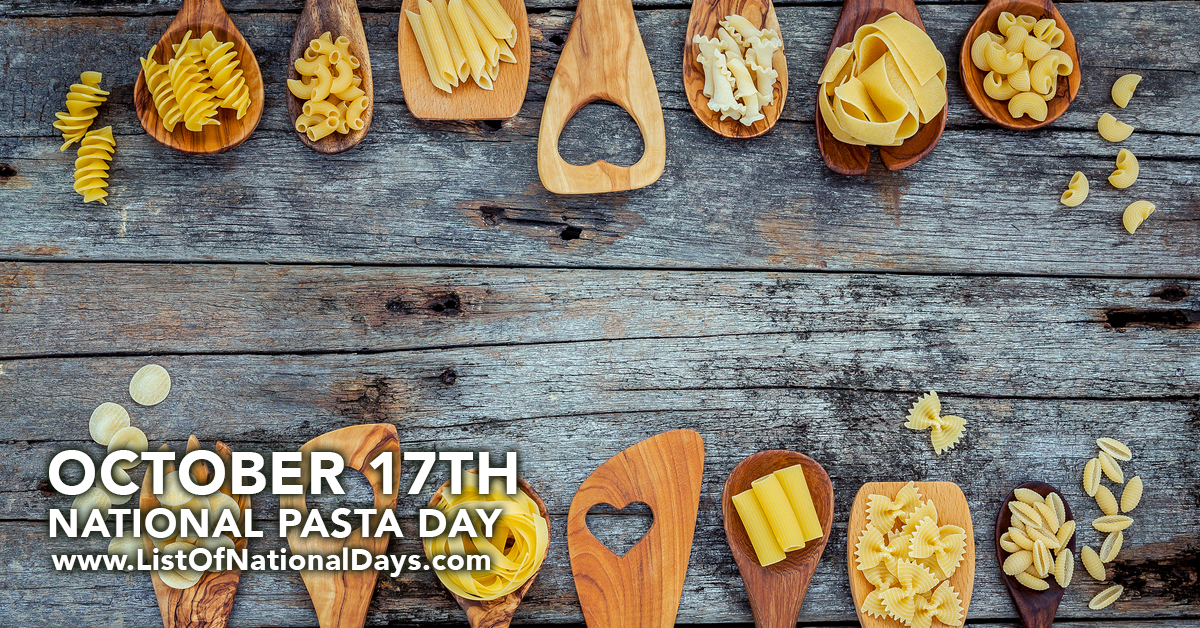
National Pasta Day, celebrated annually on October 17th, is dedicated to pasta, one of the world’s most beloved and versatile dishes. Whether it’s a simple plate of spaghetti, a creamy lasagna, or a hearty bowl of penne, pasta has become a staple in kitchens worldwide. National Pasta Day provides an opportunity to honor the history, diversity, and incredible flavors pasta brings.
The History of National Pasta Day
National Pasta Day was established to recognize and celebrate the history of pasta, its cultural significance, and its essential place in many culinary traditions. While the exact origins of National Pasta Day are unclear, pasta itself has a long and rich history dating back to ancient civilizations. It is widely believed that pasta originated in China over 4,000 years ago, with early forms of noodles made from wheat flour and water. However, pasta as we know it today, particularly in the form of Italian pasta, was popularized in Italy during the Middle Ages.
Pasta quickly became a staple of Italian cuisine, with different regions developing their varieties of pasta shapes, sauces, and preparation methods. In the United States, pasta gained widespread popularity in the 19th and 20th centuries, with Italian immigrants introducing pasta dishes to American homes and restaurants. Although not officially recognized by a specific organization, National Pasta Day has become a way for pasta lovers worldwide to celebrate this essential food, share recipes, and experiment with new pasta dishes.
Why National Pasta Day Matters
National Pasta Day is more than just an occasion to enjoy a plate of pasta—it’s a celebration of culinary traditions, creativity, and community. Here are some key reasons why National Pasta Day is so important:
Honoring Culinary Traditions: Pasta is a key element in the culinary traditions of many countries, especially Italy. It’s a versatile food that can be paired with an endless variety of sauces, meats, vegetables, and cheeses, making it a beloved dish for every occasion. National Pasta Day helps celebrate and honor the rich culinary heritage that pasta represents.
Exploring Cultural Diversity: Pasta is enjoyed in various forms across the globe, with each culture adding its own twist to the dish. From Italian pasta like spaghetti, ravioli, and fettuccine to Asian noodle dishes like ramen and pho, pasta has a universal appeal. National Pasta Day is an excellent opportunity to explore different cultural variations of pasta and learn how each region incorporates unique flavors and ingredients.
Promoting Healthy Eating: While pasta is often associated with comfort food, it can also be part of a balanced, healthy diet. Whole-grain pasta, for example, provides fiber and essential nutrients, while pasta dishes can be loaded with vegetables, lean proteins, and heart-healthy olive oil. National Pasta Day serves as a reminder that pasta can be part of a healthy and satisfying meal when prepared thoughtfully.
Encouraging Creativity in the Kitchen: Pasta is incredibly versatile, and National Pasta Day encourages home cooks and professional chefs alike to get creative in the kitchen. Whether it’s experimenting with different pasta shapes, sauces, or cooking techniques, National Pasta Day inspires culinary innovation. It’s a day to try something new, whether making fresh pasta from scratch or preparing a new pasta dish.
Bringing People Together: Pasta is often enjoyed with family and friends, making it a perfect food for social gatherings and celebrations. National Pasta Day provides an opportunity to bring people together over a shared love of food. Whether it’s cooking a meal at home, hosting a pasta dinner party, or dining out at a local Italian restaurant, pasta is a great way to create memories and enjoy the company of loved ones.
How to Celebrate National Pasta Day
There are countless ways to celebrate National Pasta Day, whether you’re an avid pasta lover or just looking to enjoy a delicious meal. Here are some fun and delicious ideas for how to celebrate this tasty occasion:
Cook Your Favorite Pasta Dish: National Pasta Day is the perfect opportunity to indulge in your favorite pasta dish. Whether it’s classic spaghetti with marinara sauce, rich fettuccine alfredo, or hearty lasagna, cooking a beloved pasta dish is a great way to honor the day. Gather your ingredients, put on your apron, and enjoy the process of preparing a comforting, delicious meal.
Try a New Pasta Recipe: If you’re feeling adventurous, use National Pasta Day as an excuse to try something new in the kitchen. Experiment with a pasta recipe you’ve never made, such as alla carbonara, pesto pasta, or gnocchi. You can also make fresh pasta from scratch for a more hands-on experience. There are endless variations and regional pasta dishes to discover.
Host a Pasta Party: Get together with friends or family and host a pasta-themed dinner party. You can make a pasta bar where guests can choose their favorite pasta shapes and toppings or prepare various pasta dishes for everyone to enjoy. This is a fun and interactive way to celebrate National Pasta Day while sharing the love of pasta with others.
Visit an Italian Restaurant: If you dislike cooking, consider visiting an Italian restaurant or a local pasta bar. Many restaurants offer pasta specials on National Pasta Day, allowing you to enjoy expertly crafted pasta dishes made by professional chefs. Dining out is a great way to experience pasta in its finest form and try new dishes that you may not have cooked at home.
Share Pasta Recipes on Social Media: Celebrate National Pasta Day by sharing your favorite pasta recipes or cooking tips on social media. Use hashtags like #NationalPastaDay and #PastaLovers to join the global celebration. Whether it’s a photo of your homemade pasta dish or a video of your cooking process, sharing your love for pasta with others can inspire them to get creative in the kitchen as well.
Learn About Pasta’s History: Take some time to learn about pasta’s history and cultural significance. You can explore its origins, how different regions in Italy and worldwide create their own versions, and the various types of pasta available. This knowledge will deepen your appreciation for this culinary staple.
Support Local Farmers and Artisans: Many small-scale farmers and artisans produce fresh pasta and high-quality ingredients used in pasta dishes. Consider supporting these local businesses by purchasing fresh pasta, organic ingredients, or artisanal pasta products. This is a great way to celebrate National Pasta Day while supporting the local economy and sustainable food practices.
The Global Appeal of Pasta
Pasta is beloved worldwide, with millions of people enjoying it in various forms and combinations. In Italy, pasta is a cultural cornerstone, with over 600 different shapes and varieties. Other countries, such as China, Japan, and Thailand, have their versions of noodles and pasta dishes, such as ramen, soba, and pad Thai. Pasta is versatile, accessible, and adaptable, making it a global favorite that transcends cultural boundaries.
Pasta is also celebrated in many international festivals and events, from Italy’s Pasta Festival to World Pasta Day, which is celebrated annually on October 25th. These global observances highlight pasta’s universal appeal and how it brings people together through food.
#HASHTAGS
#NationalPastaDay
National Pasta Day is celebrated annually on October 17th
Black Poetry Day is an annual celebration observed on October 17th in the United States. It recognizes and honors the contributions of black poets to American literature and culture. The day is dedicated to the appreciation and promotion of black poetry, which often reflects the struggles, experiences, and triumphs of the black community.
#HASHTAGS
#BlackPoetryDay
Black Poetry Day is celebrated annually on October 17th
National Playing Card Collection Day, celebrated annually on October 17th, encourages people to appreciate and collect playing cards, which are used for various games and magic tricks. The day aims to promote the rich history and artistry of playing cards and to encourage the exchange of knowledge and enthusiasm among collectors.
#HASHTAGS
#NationalPlayingCardCollectionDay
National Playing Card Collection Day is celebrated annually on October 17th
National No Beard Day is an annual observance celebrated on October 18th in the United States. It encourages men who typically wear beards or mustaches to shave them off for a day to raise awareness and funds for various charities. It is a lighthearted holiday that promotes grooming and personal hygiene.
#HASHTAGS
#NationalNoBeardDay
National No Beard Day is celebrated annually on October 18th
International Legging Day is a celebration of one of the most comfortable and versatile items of clothing. It’s a day to embrace leggings as a fashion statement and to promote body positivity. The day also recognizes the versatility of leggings, which can be worn for both exercise and everyday wear.
#HASHTAGS
#InternationalLeggingDay
International Legging Day is celebrated annually on October 18th
Spreadsheet Day is an annual event observed on October 17th to celebrate the history and benefits of spreadsheet software. It commemorates the date when the first electronic spreadsheet, VisiCalc, was released in 1979. This day is an opportunity for professionals and enthusiasts to share knowledge and resources on using spreadsheets for data analysis, budgeting, and other applications.
#HASHTAGS
#SpreadsheetDay
Spreadsheet Day is celebrated annually on October 17th